
Quick Answer: A genuinely sustainable daily yoga routine covers a brief warm-up, three to four core poses held for several breaths, and a short closing rest, all fitting comfortably within fifteen minutes. Keeping the sequence consistent for at least a few weeks, rather than changing it constantly, builds the habit considerably faster than novelty-driven variation.
Fifteen minutes feels almost too short to be worthwhile in a wellness culture that often implies longer sessions produce proportionally better results, but for building a genuinely sustainable daily habit, a short, consistent routine consistently outperforms a longer one that only happens sporadically.
This is a practical framework for building a daily fifteen-minute sequence that’s realistic to maintain long-term, rather than an ambitious routine that looks impressive on day one and quietly disappears by week three.
Why Fifteen Minutes Is Genuinely Enough
Consistent short practice produces measurably better long-term outcomes than sporadic longer sessions, both for physical flexibility and stress-related benefits, since the body and nervous system respond more meaningfully to regular, repeated signals than occasional intense ones.
Fifteen minutes is also genuinely more achievable to fit into a busy daily schedule than a thirty- or sixty-minute commitment, which matters enormously for whether a routine actually survives contact with a demanding week, a factor that matters more for long-term results than the specific length of any single session.
Structuring the Fifteen Minutes
A brief two-minute warm-up — gentle neck rolls, shoulder circles, a few rounds of cat-cow — prepares the body without eating significantly into the limited overall time, and skipping this step entirely tends to increase both discomfort and injury risk in the poses that follow.
The core of the sequence, roughly ten minutes, should include three to four poses held for several slow breaths each, rather than rushing through a larger number of poses quickly, since the genuine benefit of a pose comes considerably more from a sustained, attentive hold than from a fast pass-through.
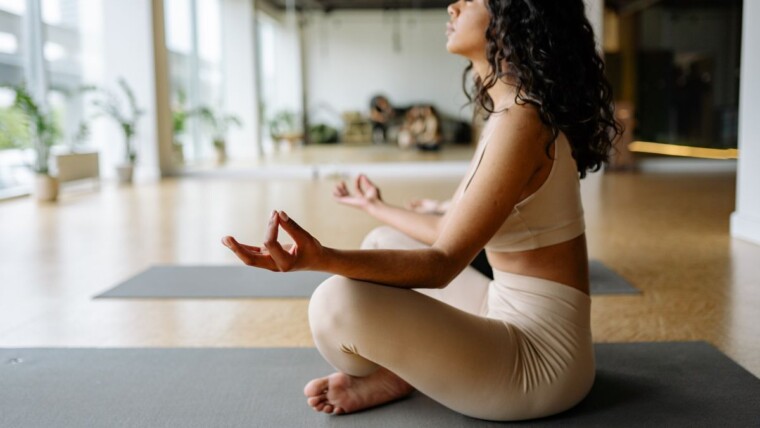
A closing two to three minutes in a resting position — child’s pose or a brief seated meditation — allows the practice to settle properly before returning to the rest of the day, and skipping this closing period, even when time feels tight, meaningfully reduces the overall calming benefit of the session.
Also Read: A Beginner’s Guide to Starting a Home Yoga Practice
Choosing Poses That Genuinely Fit Your Goals
For general flexibility and stress relief, a combination of a forward fold, a gentle twist, and a hip opener covers a broad, genuinely useful range without requiring an elaborate sequence to be effective.
For anyone dealing with a specific area of tightness — commonly the hips or lower back from prolonged sitting — weighting the sequence slightly toward poses addressing that specific area produces more noticeable, personally relevant benefit than a completely generic routine.
Keeping the Same Sequence Long Enough to Build the Habit
Constantly changing the sequence, chasing novelty or a new video each day, tends to work against habit formation, since a routine becomes considerably easier to maintain once it requires minimal conscious decision-making to actually begin, which happens through familiarity and repetition, not variety.
Sticking with essentially the same core sequence for at least two to three weeks before introducing meaningful variation allows the routine to genuinely become automatic, at which point small variations become easier to incorporate without disrupting the underlying habit that’s already been established.
Also Read: Yoga for Stress and Anxiety Relief
Making the Fifteen Minutes Actually Happen Daily
Anchoring the practice to an existing daily habit — immediately after waking, right before brushing teeth at night — genuinely improves consistency more than a standalone time commitment that has to be separately remembered and prioritised each day.
Keeping a mat permanently unrolled and visible in a consistent spot, rather than stored away requiring setup each time, removes a small but genuinely meaningful barrier that otherwise accumulates into a common reason for skipping a planned session on a busy or low-motivation day.
Adjusting the Routine as Life Gets in the Way
On a genuinely time-constrained or low-energy day, scaling the session down to five minutes rather than skipping entirely helps preserve the habit itself, since maintaining the daily pattern, even in a reduced form, matters more for long-term consistency than hitting the full fifteen minutes every single day without exception.
Treating an occasional fully missed day as a normal, expected part of a long-term routine, rather than a failure requiring a restart, also supports faster return to the habit afterward, which matters considerably more for lasting consistency than an unbroken streak that eventually collapses under its own pressure.
Also Read: How to Build a Sustainable Workout Routine (Not a 30-Day Fad)
Tracking Progress Without Overcomplicating It
A simple habit tracker, even just a basic checkmark on a calendar for each day practised, provides genuine motivation for many people without requiring detailed logging of poses, duration, or any other more elaborate metric that adds unnecessary friction to an intentionally simple routine.
Reassessing periodically, every few weeks rather than daily, whether the current sequence still feels appropriate or whether small adjustments would genuinely serve better keeps the routine responsive to changing needs without requiring constant, effortful reconsideration.
Sample 15-Minute Structure
| Segment | Duration | Focus |
|---|---|---|
| Warm-up | 2 minutes | Gentle neck, shoulder, spine movement |
| Core sequence | 10 minutes | 3-4 poses, held for several breaths each |
| Closing rest | 2-3 minutes | Child’s pose or brief seated meditation |
Key Takeaways
- Consistent short daily practice produces measurably better long-term outcomes than sporadic longer sessions.
- A brief warm-up and closing rest, even within a short overall session, meaningfully improve both safety and calming benefit.
- Holding fewer poses for longer, attentive breaths tends to be more beneficial than rushing through a larger number quickly.
- Sticking with the same core sequence for at least two to three weeks builds the habit more effectively than constantly seeking novelty.
- Anchoring practice to an existing daily habit and keeping a mat visibly ready removes small barriers that otherwise lead to skipped sessions.
Conclusion
A genuinely sustainable daily yoga routine doesn’t need to be long, varied, or impressive-looking — it needs to actually happen, consistently, which is what a realistic fifteen-minute structure, anchored to an existing habit and kept consistent for several weeks, is specifically designed to achieve. Small and consistent beats ambitious and occasional, every time, for building a practice that genuinely lasts.
Frequently Asked Questions
Is fifteen minutes of yoga a day actually enough to see benefits?
Yes, consistent short practice produces measurably better long-term outcomes than sporadic longer sessions, both for physical flexibility and stress-related benefits, making fifteen minutes daily a genuinely effective and realistic commitment.
Should I do a different yoga sequence every day to avoid getting bored?
Sticking with essentially the same core sequence for at least two to three weeks helps build the habit more effectively than constant variation, though small adjustments become easier to introduce once the routine feels genuinely automatic.
What time of day is best for a daily yoga practice?
Whichever time you can most reliably anchor to an existing daily habit tends to work best, whether that’s immediately after waking or before brushing teeth at night, rather than any universally ‘ideal’ time of day.
Do I need to warm up before a short fifteen-minute session?
Yes, even within a short session, a brief two-minute warm-up meaningfully reduces discomfort and injury risk in the poses that follow, making it worth including rather than skipped to save time.
How long does it take for a daily yoga habit to feel automatic?
Most people find a consistent daily routine starts to feel genuinely automatic after two to three weeks of sticking with the same core sequence, after which point maintaining the habit requires considerably less conscious effort.
What should I do on a day when I genuinely don’t have fifteen minutes?
Scaling the session down to five minutes rather than skipping entirely helps preserve the habit itself, since maintaining the daily pattern in a reduced form matters more for long-term consistency than hitting the full duration every single day.
Is it worth tracking my daily yoga practice?
A simple habit tracker, like a basic checkmark on a calendar, provides genuine motivation for many people without requiring detailed logging, and reassessing the sequence every few weeks keeps the routine responsive without adding unnecessary complexity.