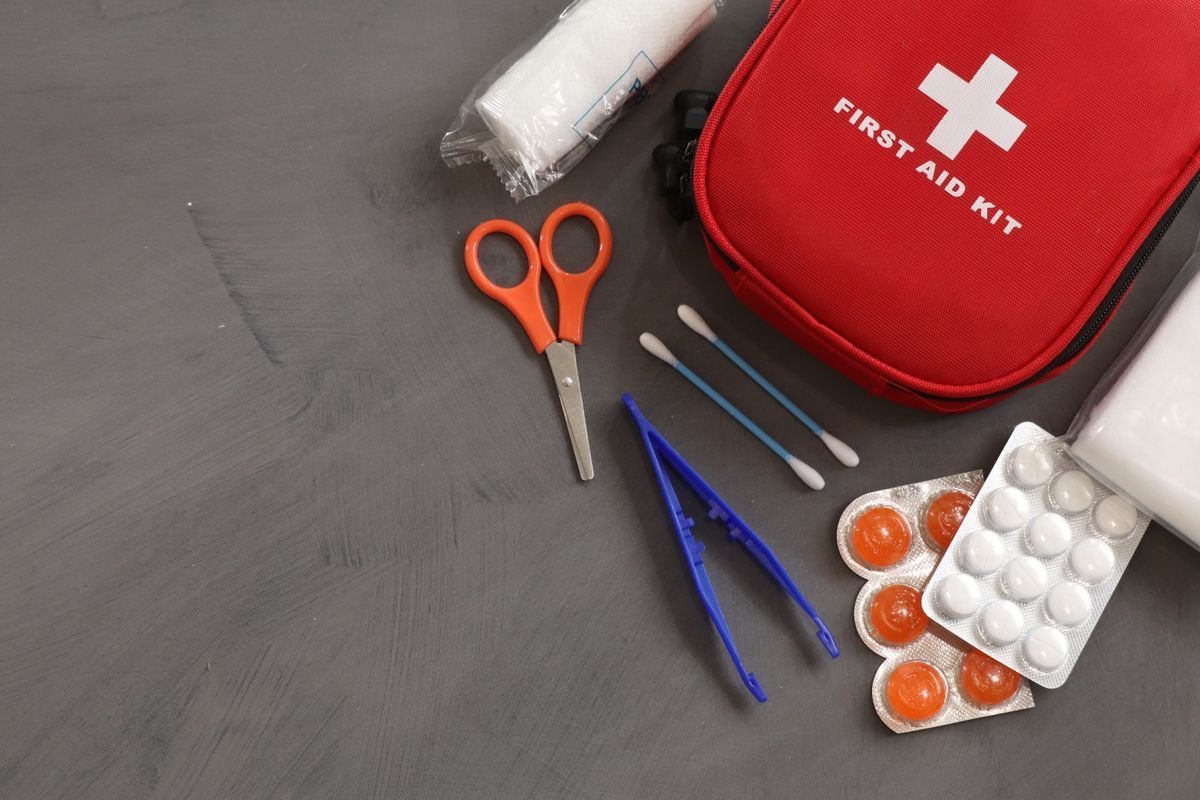
Quick Answer: A genuinely useful home first-aid kit covers four areas: wound care, pain and fever management, tools (tweezers, thermometer, scissors), and household-specific extras like allergy medication or child-safe dosages. Most pre-made kits sold in shops are built for minor cuts and nothing else — this guide fills the gaps.
Most households have a first-aid kit that’s really just a box of plasters and a suspiciously old tube of antiseptic cream. Which is fine, until someone actually needs it for something more than a paper cut, and suddenly you’re googling ‘how much ibuprofen is too much’ at eleven at night.
A first-aid kit that’s actually built for real life looks a bit different from the £8 version you grab at the supermarket checkout. It’s not about buying more stuff for the sake of it — it’s about having the right things, organised in a way you can find at 2am when you’re not thinking clearly, because nobody thinks clearly when someone’s bleeding or a child has a fever.
Wound Care: The Non-Negotiables
Plasters in multiple sizes are the obvious start, but most kits stop there and that’s a mistake. You want sterile gauze pads for anything bigger than a plaster can handle, medical tape to hold them in place, and a roll of self-adhesive bandage for sprains or wraps that doesn’t need pins.
Antiseptic wipes are more practical than a bottle of liquid antiseptic, mostly because they don’t spill in a drawer and they don’t dry up unnoticed over two years. A small tube of antibiotic ointment helps prevent infection in minor wounds, though it’s worth knowing it’s not necessary for every scrape — clean water and a plaster genuinely does the job for most small cuts.
One thing people consistently forget: a pair of proper first-aid scissors. Not kitchen scissors, not nail scissors — ones with a blunt tip designed to cut clothing or bandages without risking the skin underneath.
Pain, Fever, and Allergy Basics
Paracetamol and ibuprofen cover most everyday pain and fever situations, but the detail that trips people up is dosage — adult and child formulations are different, and guessing at 2am is exactly how mistakes happen. Keep the original packaging with dosage instructions inside the kit itself, not tucked away in a kitchen cupboard three rooms over.
Antihistamines belong in every kit, even for households without diagnosed allergies. Reactions to new foods, insect stings, or unfamiliar plants can appear in anyone, and having something on hand while you assess whether it’s serious enough for A&E buys valuable time.
If anyone in the household carries an EpiPen or has a known severe allergy, that’s obviously kept separately and close to hand — but it’s worth noting its location clearly inside the main kit too, in case someone else needs to find it fast.
Also Read: Early Warning Signs Your Body Is Trying to Tell You Something
Tools You’ll Actually Use
A digital thermometer is worth the small expense — the old mercury ones are both outdated and genuinely risky if broken. Tweezers for splinters, a small torch for checking pupils or throats, and disposable gloves round out the essential tools.
Instant cold packs are one of those things nobody thinks to buy until they need one immediately for a swollen ankle or a bump to the head. They’re cheap, they store indefinitely, and they’re far more useful in the moment than running to find frozen peas.
Household-Specific Additions
Every household is slightly different, and a kit built for a family with young kids should look different from one built for two adults. Families with children benefit from a fever-reducing suppository option (useful when a child won’t keep oral medicine down), children’s dosing syringes, and plasters in fun designs that make the whole ordeal slightly less traumatic.
Households with older adults or anyone on regular medication should keep a written, updated list of current prescriptions inside the kit — it sounds excessive until a paramedic is asking questions and nobody in the room can remember the exact dosages under pressure.
If anyone has a chronic condition — asthma, diabetes, a heart condition — that person’s specific emergency items (inhaler, glucose tablets, aspirin) deserve their own clearly labelled section, separate from the general kit, so there’s no fumbling in a crisis.
Also Read: Common Childhood Illnesses: What’s Normal, What’s Not
Where People Get It Wrong
The single biggest mistake isn’t missing items — it’s location. A perfectly stocked kit buried in the back of a garage or a top shelf nobody can reach quickly might as well not exist in an actual emergency. It needs to live somewhere central, known to every adult in the house, and ideally somewhere a child could point to if asked.
The second mistake is treating the kit as a one-time purchase. Plasters get used and not replaced. Medication expires quietly on a shelf for two years. Batteries in that small torch die without anyone noticing until the moment it’s needed. A kit that isn’t checked periodically slowly turns into a box of expired good intentions.
The third, and probably most common, is building a kit around minor injuries only and forgetting anything for genuine emergencies. A first-aid kit isn’t just for scraped knees — it should include something for burns (a burn gel or dressing), something for sprains (an elastic bandage), and ideally a printed card with emergency numbers and basic CPR steps, because in a genuine crisis, memory is the first thing to go.
Building a Kit for Specific Situations
Households with pets sometimes overlook that a first-aid kit built for humans doesn’t cover animal emergencies well — human medication like ibuprofen is actually toxic to dogs, so keeping pet-safe items separate (and clearly labelled) avoids a dangerous mix-up under pressure.
For anyone who travels regularly, a compact travel version makes sense — smaller quantities of the essentials, plus motion sickness tablets, rehydration sachets for travel-related stomach upsets, and a copy of any regular prescriptions in case of loss or delay.
Outdoor or hiking households benefit from adding a proper triangular bandage, blister plasters, and a basic emergency blanket — items that rarely come up in daily home life but matter significantly the one time they’re genuinely needed.
Also Read: Seasonal Illness Prevention: What Actually Works vs What’s Myth
Storing and Organising the Kit Properly
A cluttered kit is nearly as bad as an empty one, because fumbling through loose items while someone’s actually hurt adds precious minutes to a situation where minutes matter. A simple system — clear zip pouches for wound care, a separate pouch for medication, tools kept visible at the top — makes a real difference when you’re not thinking clearly.
Labelling matters more than people expect, particularly in households where more than one adult might need to grab the kit. A quick label on the outside of each pouch (‘wounds,’ ‘meds,’ ‘tools’) means anyone can find what they need without knowing the internal system by heart.
For anyone genuinely serious about being prepared, laminating a single-page ‘what to do’ card — covering choking, CPR steps, and when to call emergency services versus when to handle something at home — and keeping it clipped to the inside lid of the kit removes the need to search for that information under pressure. It’s a small addition that consistently gets mentioned by first-aid instructors as one of the more useful things a household can add.
First-Aid Kit Checklist by Category
| Category | Must-Have Items | Often Forgotten |
|---|---|---|
| Wound care | Plasters, gauze, medical tape, antiseptic wipes | Blunt-tip first-aid scissors |
| Burns & sprains | Burn gel, elastic bandage | Emergency information card |
| Situational extras | Travel meds, blister plasters | Pet-safe items kept separate |
| Pain & fever | Paracetamol, ibuprofen, antihistamines | Separate child dosing instructions |
| Tools | Digital thermometer, tweezers, gloves | Instant cold packs |
| Household-specific | Prescription list, chronic condition items | Children’s dosing syringe |
Key Takeaways
- A functional first-aid kit covers wound care, pain/fever relief, tools, and household-specific medical needs — not just plasters.
- Keep dosage instructions inside the kit itself, especially for households with both adults and children.
- Instant cold packs and blunt-tip scissors are two of the most overlooked but genuinely useful additions.
- Households with chronic conditions or allergies should keep those specific items separately labelled within the kit.
- Check and replace expired medication every six to twelve months — an expired kit is barely better than no kit at all.
Conclusion
None of this needs to be expensive or complicated. Most of what’s listed here costs under £30 to put together properly, and once it’s built, the only ongoing job is checking expiry dates a couple of times a year. The value isn’t really in the box itself — it’s in not having to think, search, or panic when something actually happens. That’s the whole point of having one in the first place.
Frequently Asked Questions
How often should I check my first-aid kit?
Every six months is a sensible check-in to replace expired medication, restock used items, and top up plasters, with a more thorough review once a year.
Where’s the best place to store a first-aid kit at home?
A cool, dry, easily accessible spot away from direct sunlight — a hallway cupboard or under-stairs storage tends to work better than a bathroom, where humidity can degrade medication faster.
Do I need separate kits for home and car?
Yes, it’s worth keeping a smaller, more compact version in the car, since temperature extremes and space constraints mean it should be built slightly differently from the home version.
Is it worth buying a pre-made first-aid kit or building one myself?
Pre-made kits are a reasonable starting point, but most are built around minor cuts and grazes, so adding the extras covered here, particularly medication and household-specific items, makes a real difference.
What should I do with expired medication from my first-aid kit?
Take it to a local pharmacy for safe disposal rather than throwing it in household bins or flushing it, since many pharmacies offer this service free of charge.
Should I include prescription medication in a first-aid kit?
Only in the sense of keeping a written, updated list of what’s prescribed and to whom; actual prescription medication is better kept in its original, clearly labelled packaging rather than moved into the general kit, where dosing details can get lost.
How big should a home first-aid kit realistically be?
A standard household kit fits comfortably in a shoebox-sized container; anything much larger usually means duplicate items rather than genuinely useful additions, so bigger isn’t necessarily better.